Jungian reflections on the body, eternal youth, and the courage to be original
1. When beauty becomes a prison
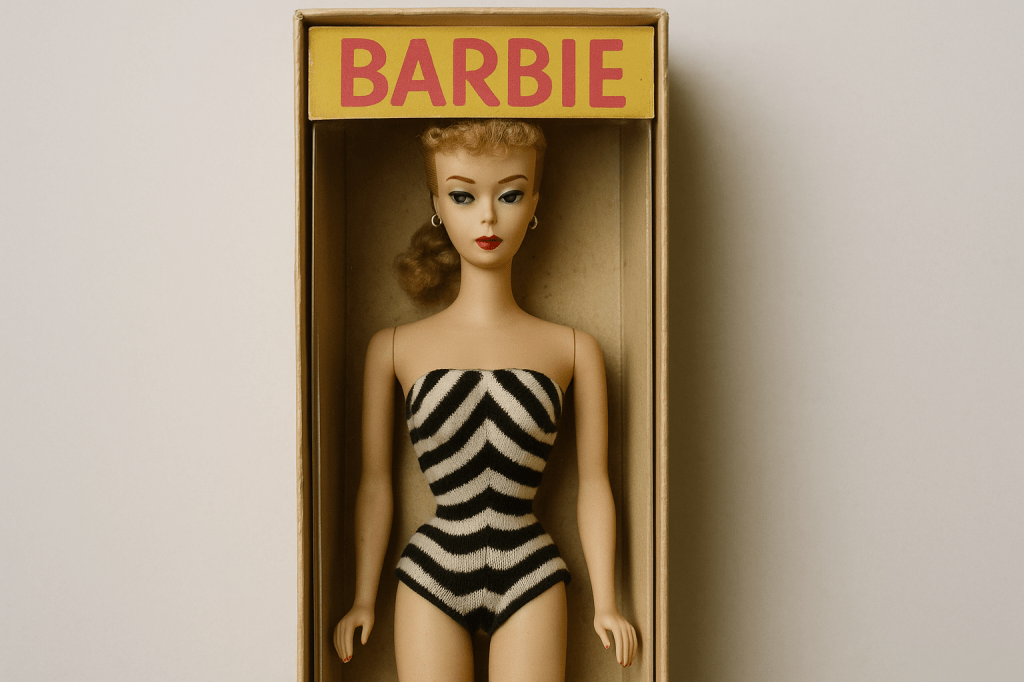
We live surrounded by images: flawless feeds, filters that erase pores, beauty campaigns with almost identical bodies. In the middle of all this, there is a silent and insistent model I’ll call the “Barbie Standard”: a specific body, face and age imposed as if it were the only acceptable way to be beautiful.
A blonde doll, forever young, impossible waist, endless legs. At first it seems harmless: it’s “just” a toy, “just” a trend. But research shows that exposure to images of the original Barbie doll can lower body esteem and increase body dissatisfaction in very young girls.PMC+1
Later, some studies find mixed or modest effects in adulthood, suggesting that the impact is not linear and not the same for all women.ResearchGate+1 Still, the symbol remains powerful: an ideal of thinness and youth that infiltrates culture, advertising and, much more deeply, the way we relate to the mirror.
2. The Barbie Standard as a collective persona
In analytical psychology, persona is the social mask: the way we present ourselves to the world. We need it — no one lives without some kind of persona. The problem begins when the mask becomes a prison.
The Barbie Standard acts as a manufactured collective persona:
- a very narrow range of body measurements;
- frozen youth;
- skin without marks, wrinkles or history;
- often eurocentric features, disconnected from the real diversity of faces and bodies.
There is nothing “wrong” about being naturally blonde and slender — if that is your nature. A woman like Gisele Bündchen, for instance, stands close to her spontaneous body type: she is not violently reshaping herself to fit a mold, she is that shape. The suffering begins when culture tries to make all women convert to that mold, whatever the cost.
3. The body as a battlefield (lifts, surgery and eternal youth)
More and more young women are turning to radical procedures such as very expensive facial lifting surgeries to erase any sign of aging. The point here is not to judge individual choices, but to look at the phenomenon:
- standardized, over-pulled faces that lose expression;
- panic at the sight of a single wrinkle;
- extreme financial sacrifices in the name of an “ageless” face.
At the same time, the hair industry profits from a cycle of aggressive bleaching + repair treatments: first they sell the destruction of the hair fiber, then they sell its “miraculous” recovery. It’s no coincidence that the bleached blonde look is so heavily promoted: it is beautiful for those who love it and at the same time highly profitable.
The psychic result? A body experienced as enemy, a face policed from the age of twenty, a constant war against time. The Self, however, is not interested in perfect dolls — it is interested in living people.
4. It’s not about being blonde or having surgery – it’s about where the gesture comes from
From a Jungian perspective, the central question is not:
“Is it right or wrong to change the body?”
But rather:
“Does this gesture come from fear or from love?”
“Am I moving closer to my true face, or trying to erase it?”
“Do I want to be more myself, or do I want to disappear from myself to fit a mold?”
Aesthetic procedures, haircuts, color changes, tattoos, adornments — all of these can be legitimate expressions of the Self when there is coherence between soul, body and gesture.
I deeply admire artists such as Rachel Brice and Zoe Jakes, for example. They are fusion dancers with unique styles in which make-up, costume, jewelry and posture converse with the soul of the dance they offer. They align technique, narrative, personality and appearance, creating an aesthetic that is an extension of their inner world, not just a mass-produced copy of whatever happens to be trending.
The problem is not change. The problem is getting lost in the change.
5. Black Friday, consumerism and the body for sale
Days like Black Friday amplify the noise: the body becomes the target of “unmissable offers,” bundled procedures, surgeries on sale, “miracle” treatments with a 24-hour deadline. Research shows that these campaigns trigger intense emotions, fear of missing out, impulsive buying and social comparison — often at the expense of mental health and financial stability.jelly.pt+3Psychology
6. Paths of liberation: from Barbie to the Self
How can we start freeing ourselves from this harmful standard?
Some possibilities:
- Mapping your own beauty
- Writing (or drawing) which features, shapes, textures and colours make you feel alive.
- Distinguishing what is your desire from what is external pressure.
- Honouring the marks of time
- Seeing wrinkles, spots and scars as the handwriting of the soul on the body, not defects.
- Allowing the face to follow the story instead of freezing it.
- Creating small rituals of care
- Turning showers, creams and hair care into micro-rituals of meeting yourself, rather than inspections for flaws.
- Treating the body as an altar, not a product.
- Questioning before any intervention
- “If no one saw me, would I still want this change?”
- “Am I trying to move closer to myself, or to rescue a relationship, a status, an illusion?”
- Cultivating diverse references of beauty
- Following women who embody authenticity, not only the mass-produced standard.
- Consuming art and dance that honour real bodies in real movement.
7. A final invitation
Close your eyes for a moment and imagine:
- Around you, all your versions: child, teenager, adult, future elder.
Ask them:
“What is truly beautiful in us?”
“What kind of beauty can never be bought or lost?”
Whatever comes — sensation, memory, colour, tears — write it down. These are the letters the Self is asking you to mail into the world.
Instituto Anemos – Angela Paulette
 Instituto Anemos
Deixe um comentário